
September 2016 - December 2018
Tool for Hi-Rel Parts in Space Applications
Interaction & UX Designer
Introduction
DoEEEt by ALTER Technologies needed to simplify access to critical technical data on over 22 million Hi-Rel components for space applications. The challenge was to design an intuitive B2B platform that streamlined engineers’ decision-making by centralizing fragmented manufacturer information. The work split into three parts: a search engine with advanced options, filtering across both component-specific and cross-project criteria, and comparison, the hardest of the three, given how many nuances separated one component from another: obsolescence, durability, certifications.
I owned interaction and UX design across all three, from the first version through DoEEEt 2.0.
Framing
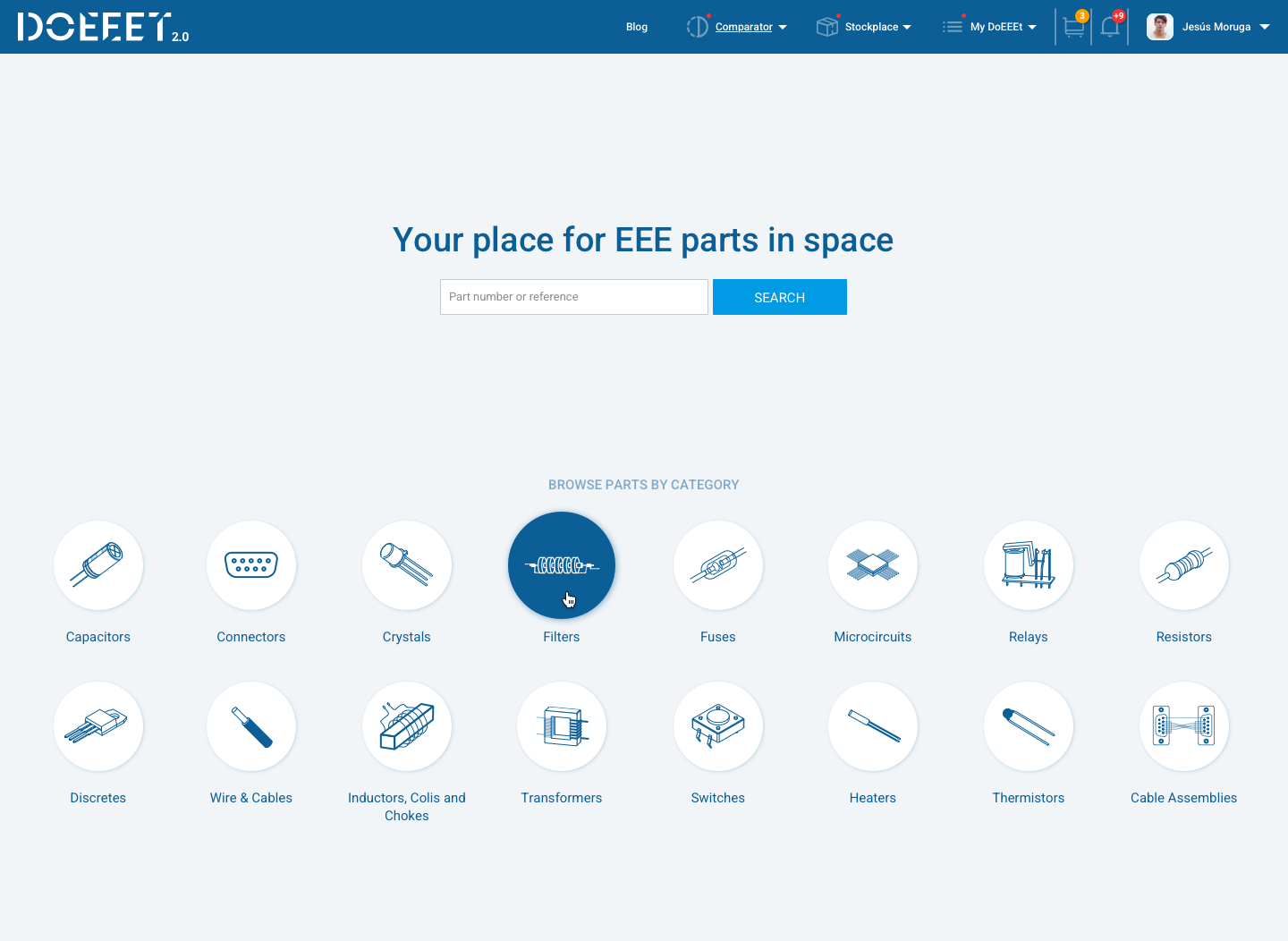
V1 shipped search and its results page built around a single principle: simplicity, so engineers could decide fast. In practice, that meant surfacing every filtering option directly on the results screen.
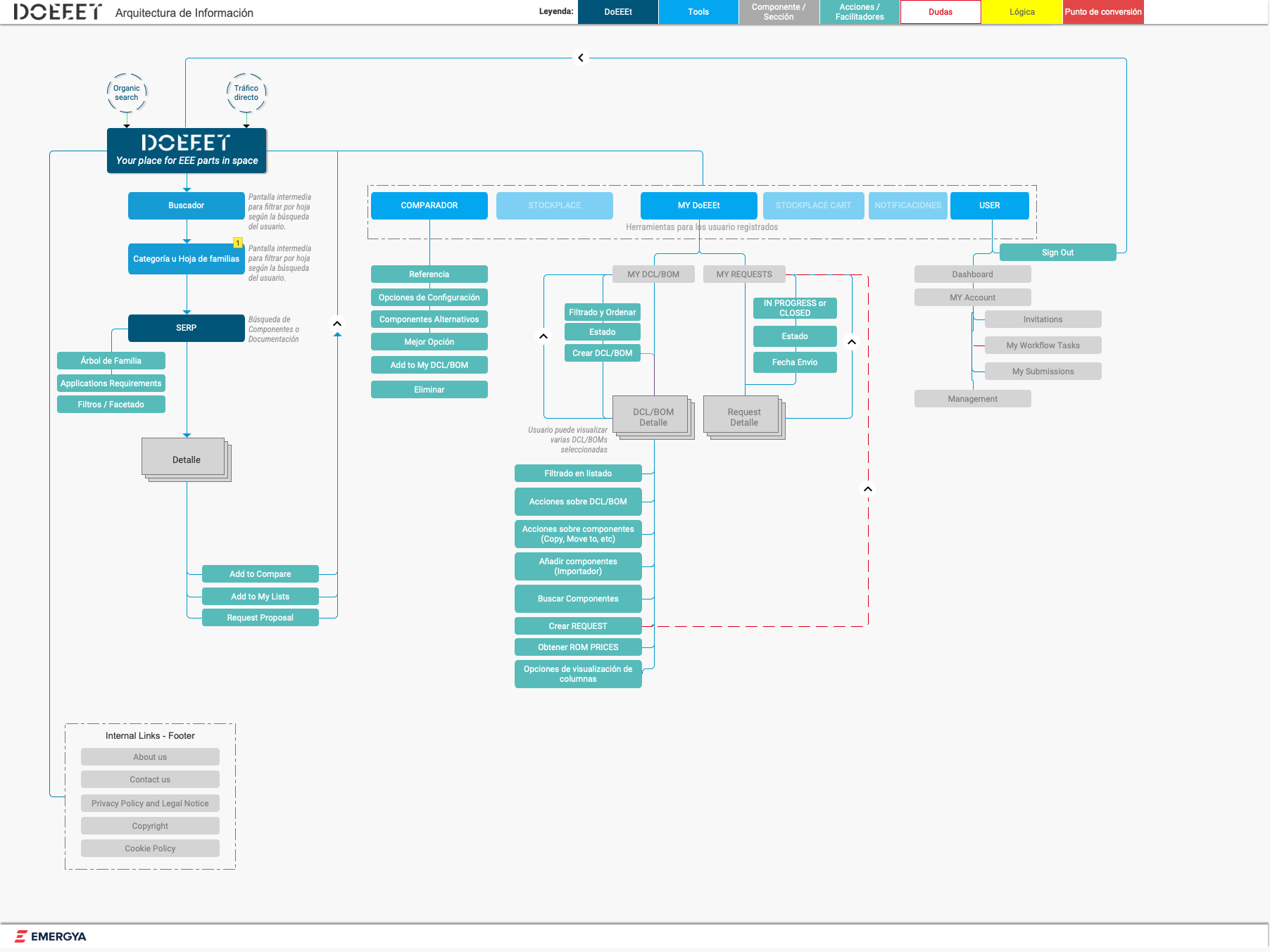
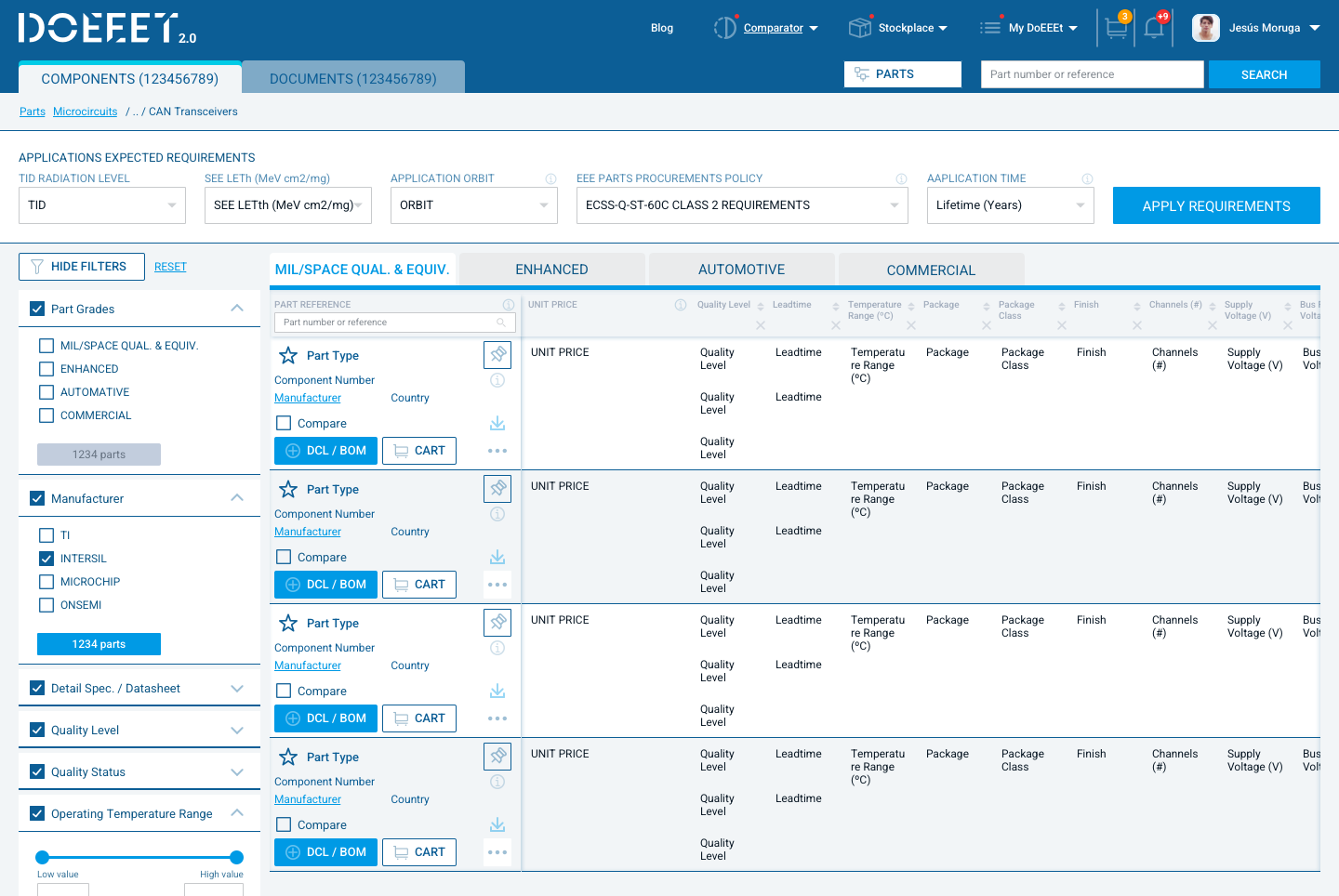
Testing with real, technical users showed the limit of that approach. There was no single pattern the business could point to for which filters mattered most, so showing all of them on one SERP layout overwhelmed users instead of helping them decide. We discarded that flat layout and replaced it with an advanced filtering panel paired with a results table, where each row carried its own entity, plus a separate way to manage alerts on individual items.
Crafting
Search, filtering, and comparison
Search combined free-text with advanced options. Filtering split into criteria specific to a component and transversal criteria tied to a project. Comparison handled the nuances that made components hard to tell apart at a glance: obsolescence, durability, certifications. The catalog was too large to browse manually.
From V1 to DoEEEt 2.0
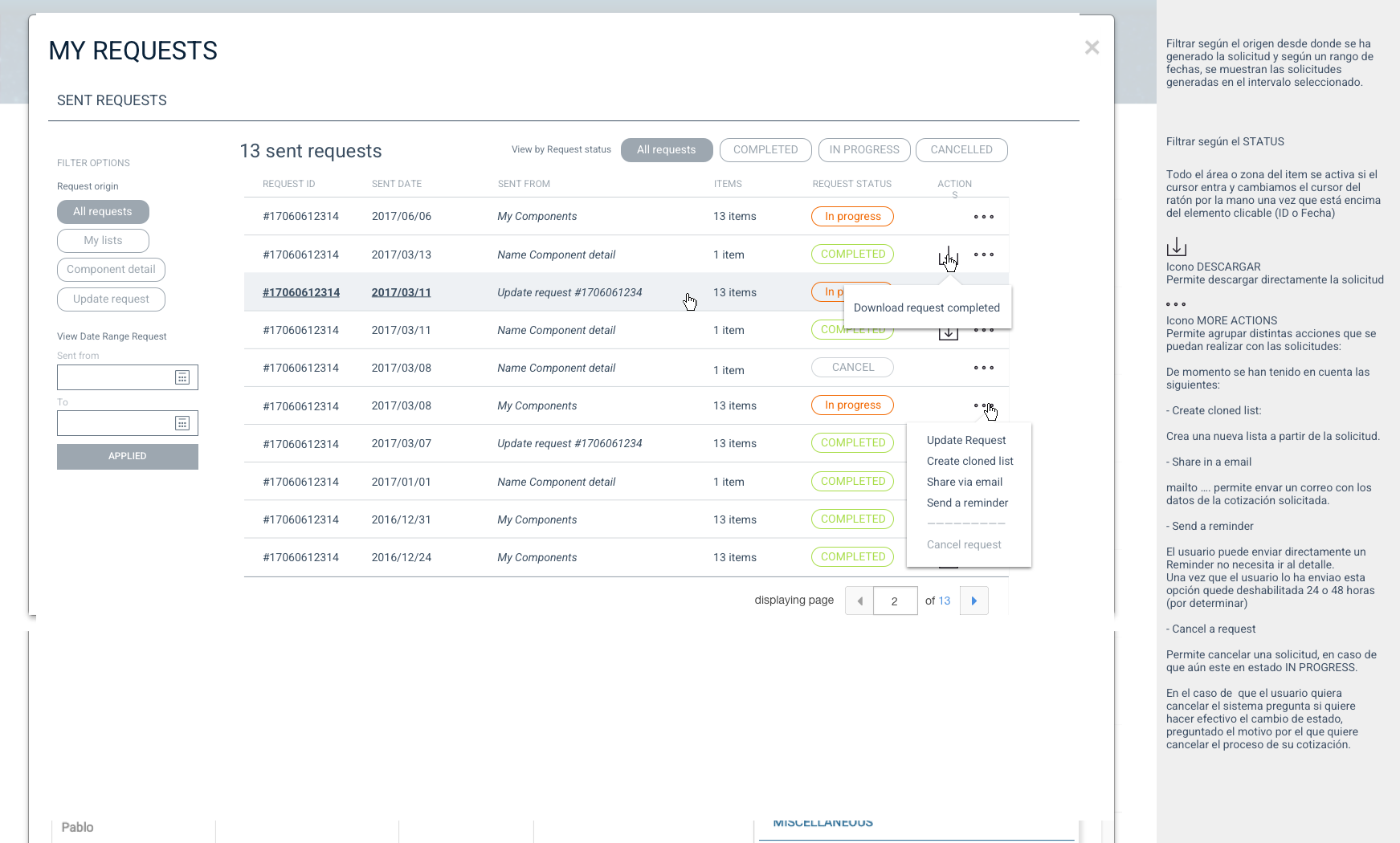
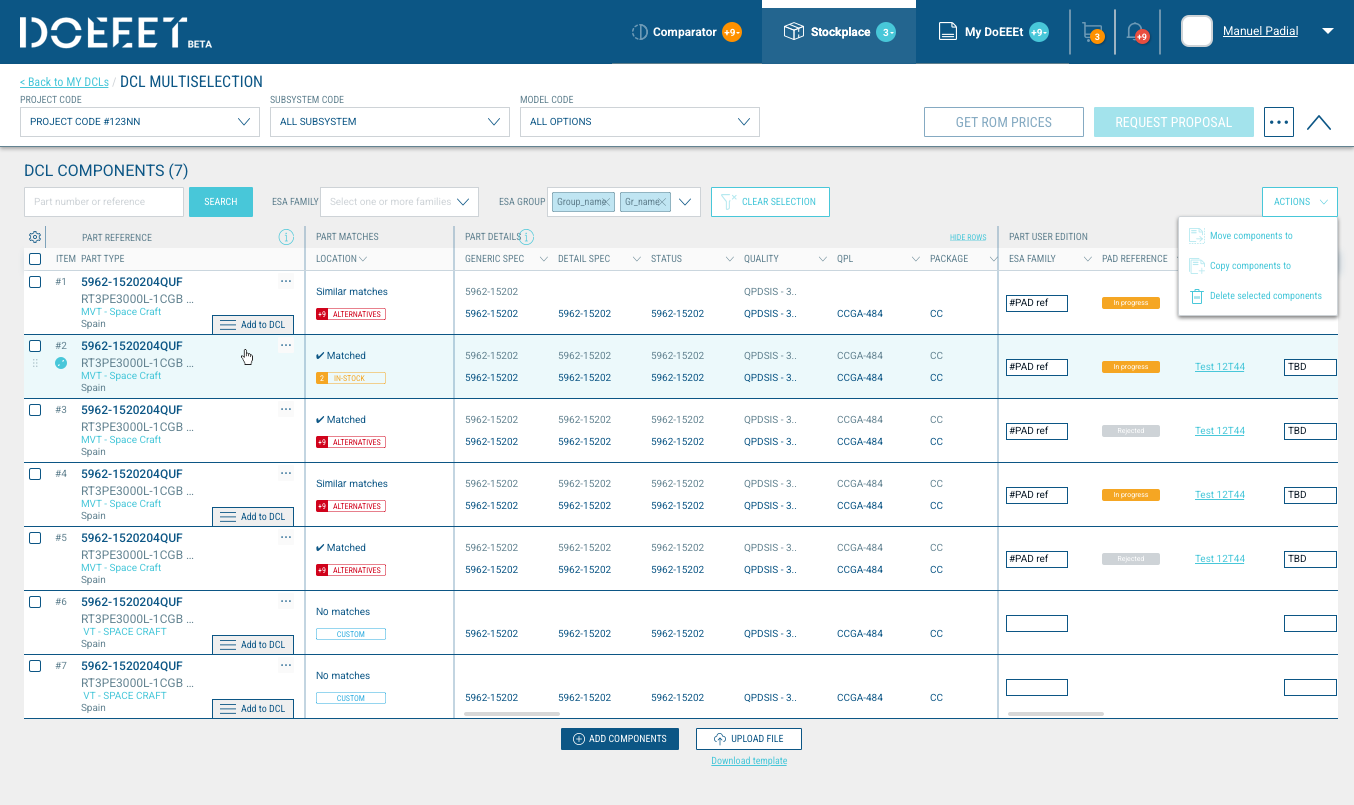
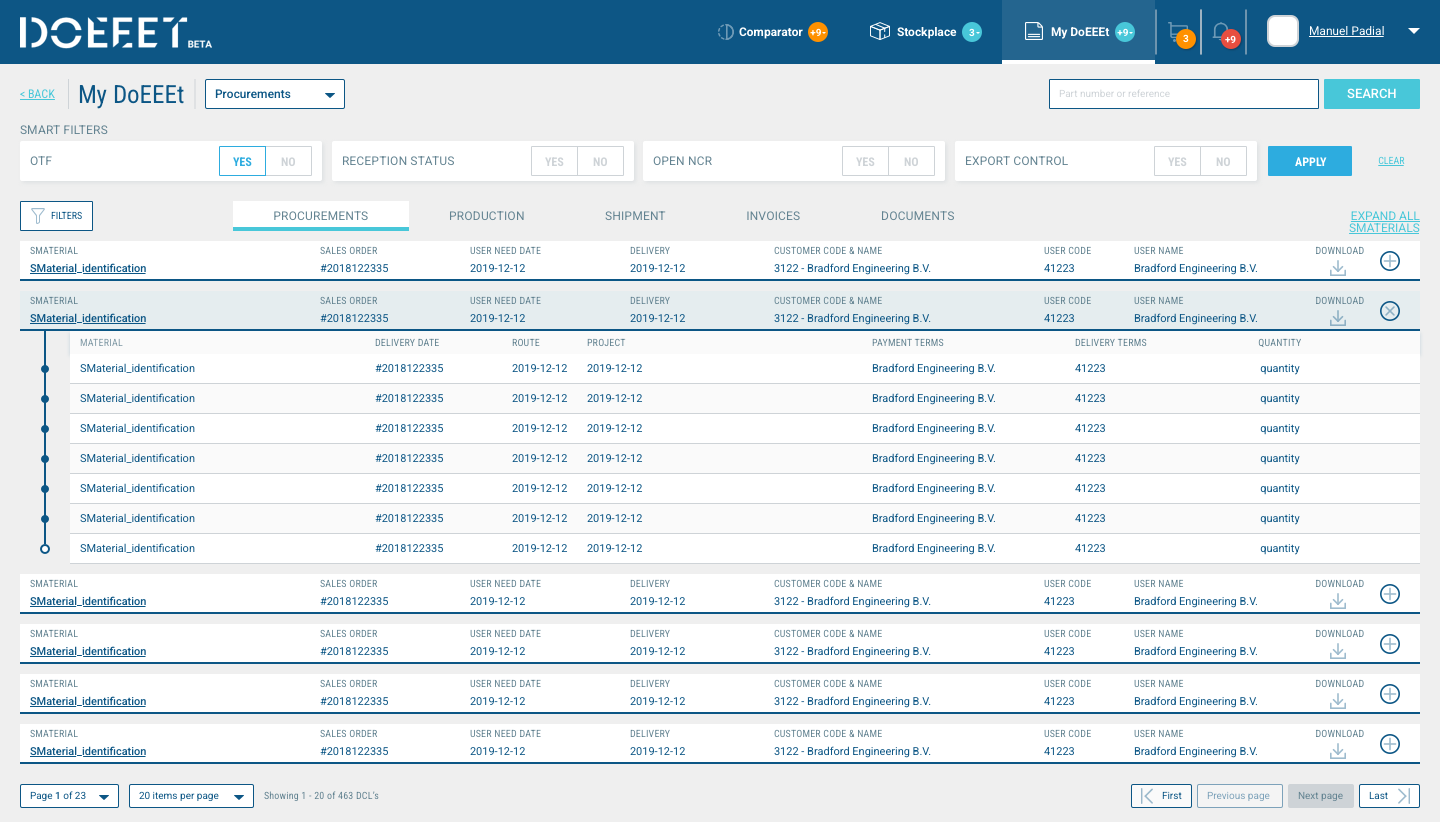
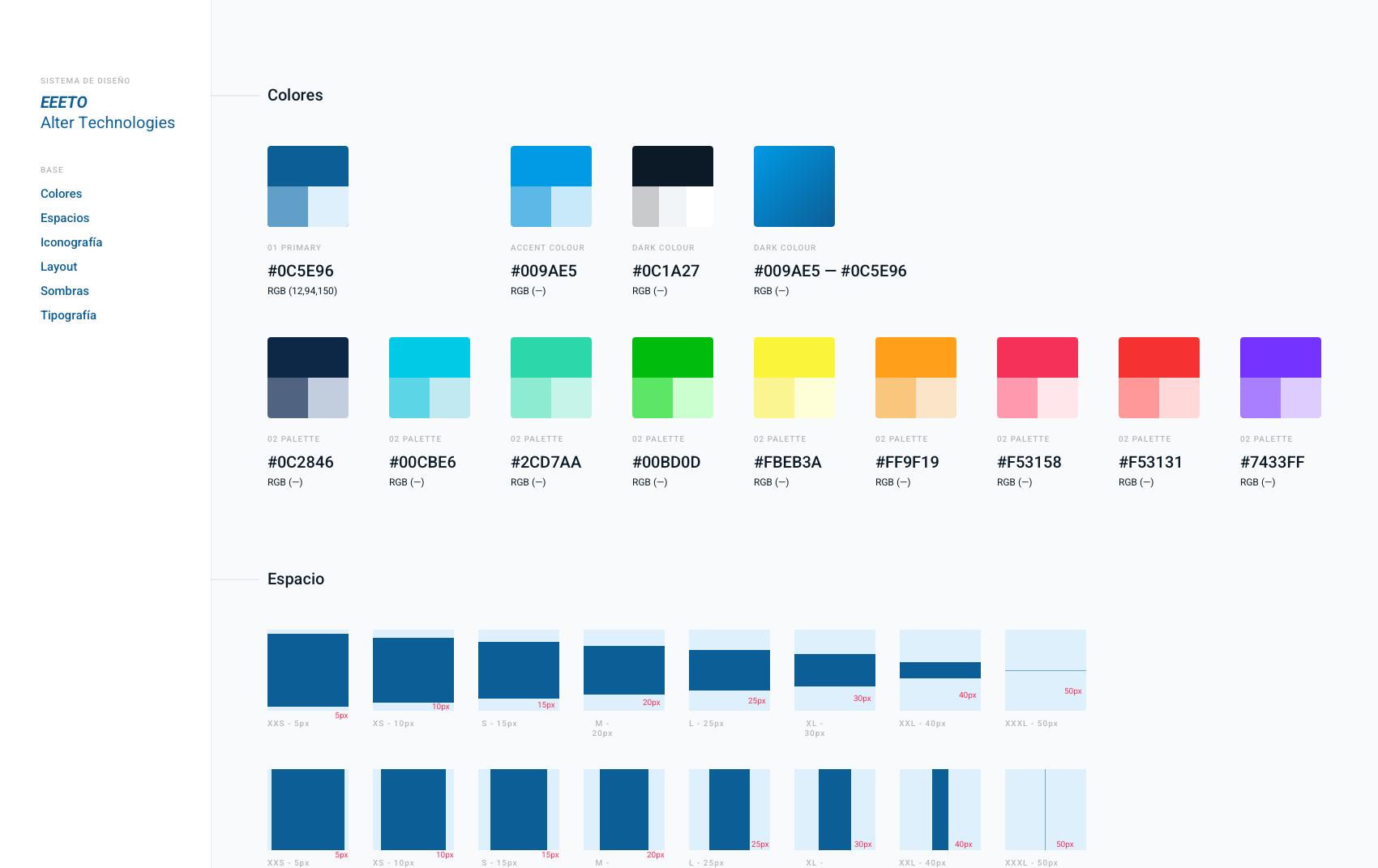
V1’s direction held, but every round of testing surfaced needs the first version hadn’t covered. DoEEEt 2.0 answered them on top of a design system that let the team move faster than V1’s flow-by-flow build had allowed. That same system carried the platform into project management: creating and configuring projects, controlling user access, and validating requests, functionality V1 never had to support.
Outcome
The filter-and-table pattern solved what the flat SERP layout couldn’t: engineers could narrow down thousands of Hi-Rel components without losing track of the ones they were watching through alerts. The design system built for DoEEEt 2.0 outlived its first use case. It was what let the platform absorb an entirely new capability, project management with access control, without rebuilding the interaction model from scratch.