March 2019 - April 2021
Voice Assistant with Multilingual Support
Lead Product Designer
Introduction
Meliá needed to cut operational costs without lowering service quality across its customer service lines. The project started in early 2019, automating processes that were operationally basic but added little direct value for guests. The constraint sharpened considerably when COVID-19 hit: cancellations and booking changes pushed call volumes far beyond what the existing setup could absorb.
I owned the assistant as a product end to end — research, conversational design direction, NLP strategy, and the growth of the team that built and maintained it — working with computational linguists, engineers, and Meliá’s stakeholders.
Discovery
Every new use case had to be built one at a time, with no room to test alternatives in parallel. As the assistant grew, some already-shipped flows needed to be replanned mid-flight, and each replan added extra QA effort on top of an already tight backlog. This wasn’t a process problem — it was a platform ceiling: the assistant’s early infrastructure only supported limited, sequential iteration.
Key inputs that shaped the direction:
- User interviews and analysis of past interactions to identify recurring intents and ambiguous queries.
- Ongoing tracking of where use cases broke and had to be replanned, and the QA cost each replan carried.
- Evaluation of Google Cloud’s Dialogflow once the pandemic demanded a faster pace of iteration than the existing platform could support.
The problem wasn’t which use case to automate next. It was that the platform itself couldn’t keep up with how fast use cases needed to change once COVID hit.
Framing
Moving the assistant onto Dialogflow, on Google Cloud Platform, was the core product decision. Its flexibility let the team personalize and evolve the assistant close to real time, which made it possible to absorb pandemic-driven use cases, like full end-to-end reservation cancellations, as they appeared instead of replanning shipped flows after the fact.
Treating platform flexibility as a non-negotiable product requirement, not an implementation detail, shaped everything that followed: multi-intent recognition, first in Spanish and later in English, was built on the same principle. The assistant had to keep pace with a fast-moving situation rather than a fixed intent roadmap.
The alternative we discarded was extending into written chat channels alongside voice. Emergya focused instead on going deeper on the conversational layer, growing the team with computational linguists and interaction designers under my direction rather than splitting effort across channels.
Crafting
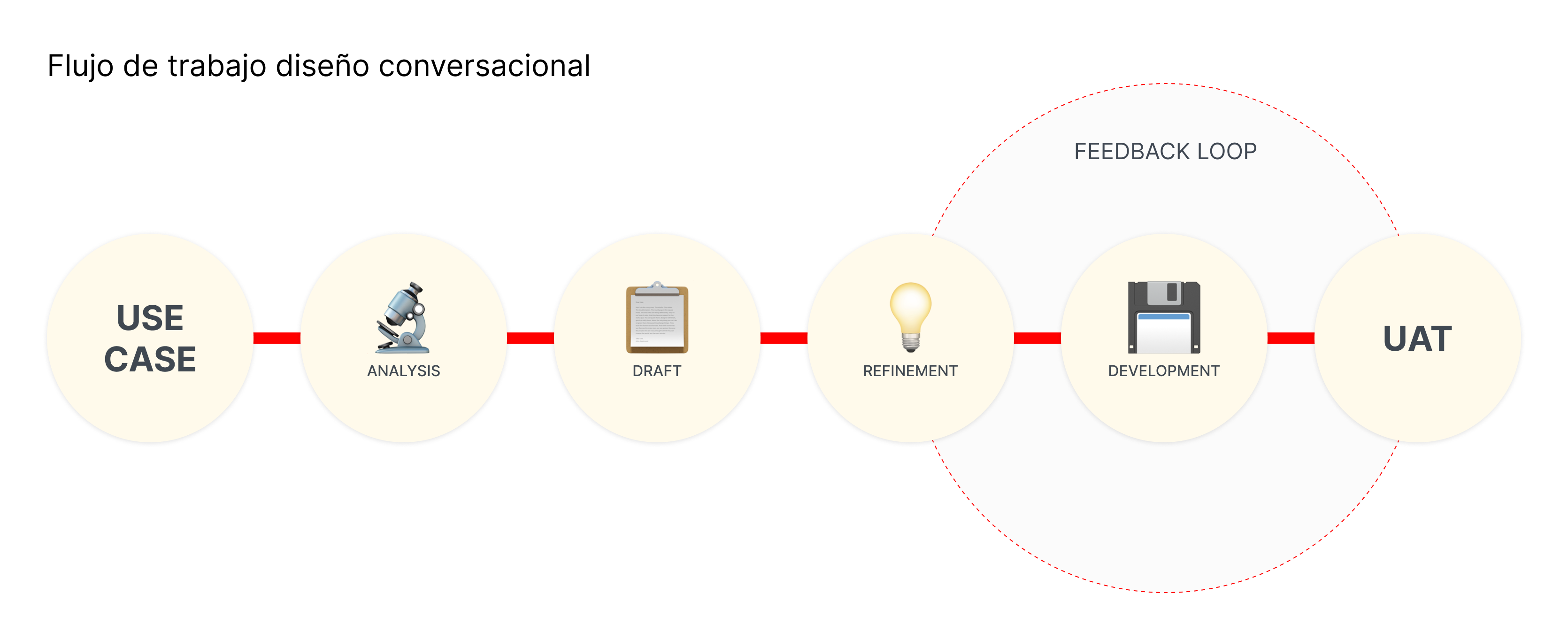
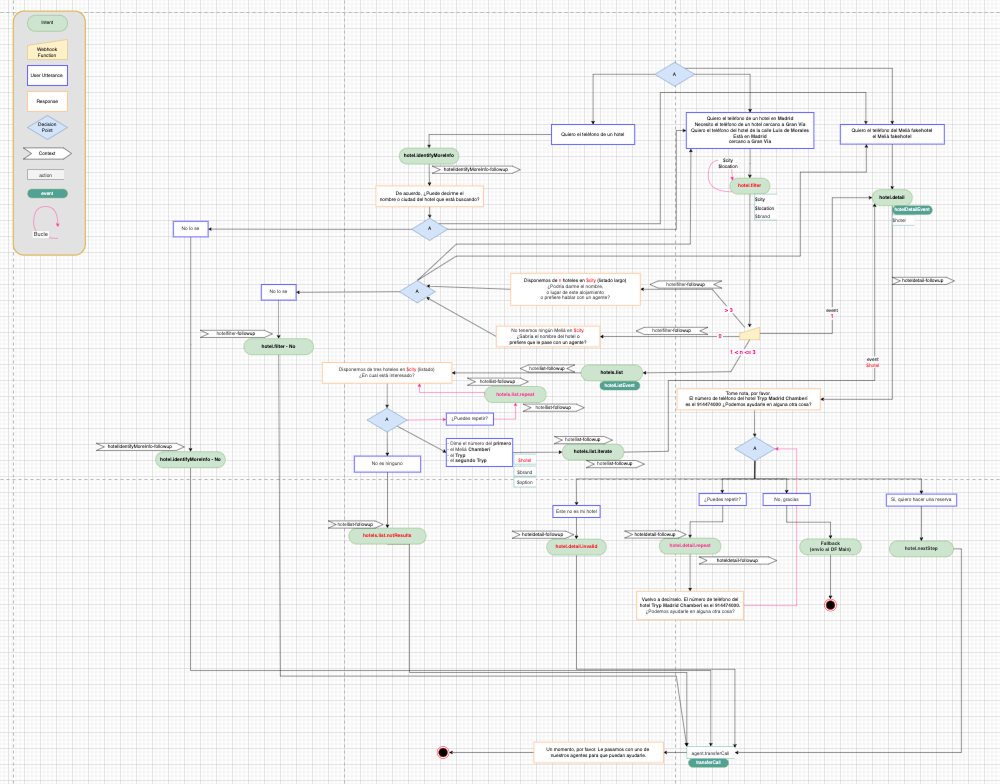
Conversational flow design
I designed and refined conversation flows in Dialogflow, aligning tone and structure with Meliá’s brand experience while keeping room for the assistant to handle both simple queries and complex, multi-step processes like full cancellations.
Personality and tone
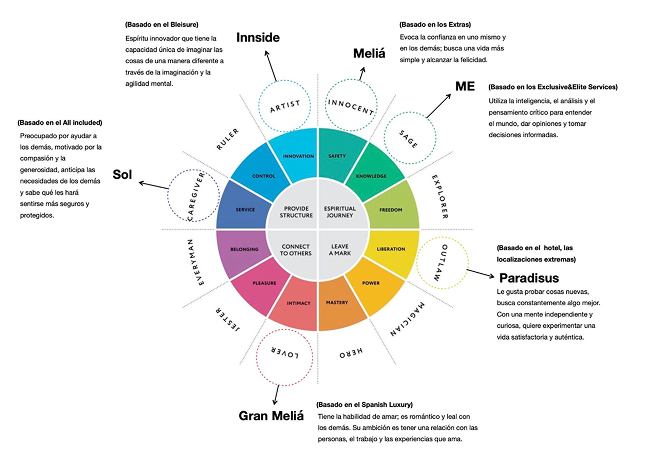
I defined the assistant’s voice and personality to keep communication consistent across every use case, so a caller got the same “person” whether they were asking about a reservation or canceling one.
NLP tuning and intent coverage
Intents, entities, and training phrases were continuously fine-tuned to cut ambiguity in user queries, working closely with the computational linguists on edge cases the model kept missing. With a single rule: “Keep it simple, it sounds human”.
Growing and leading the conversational design team
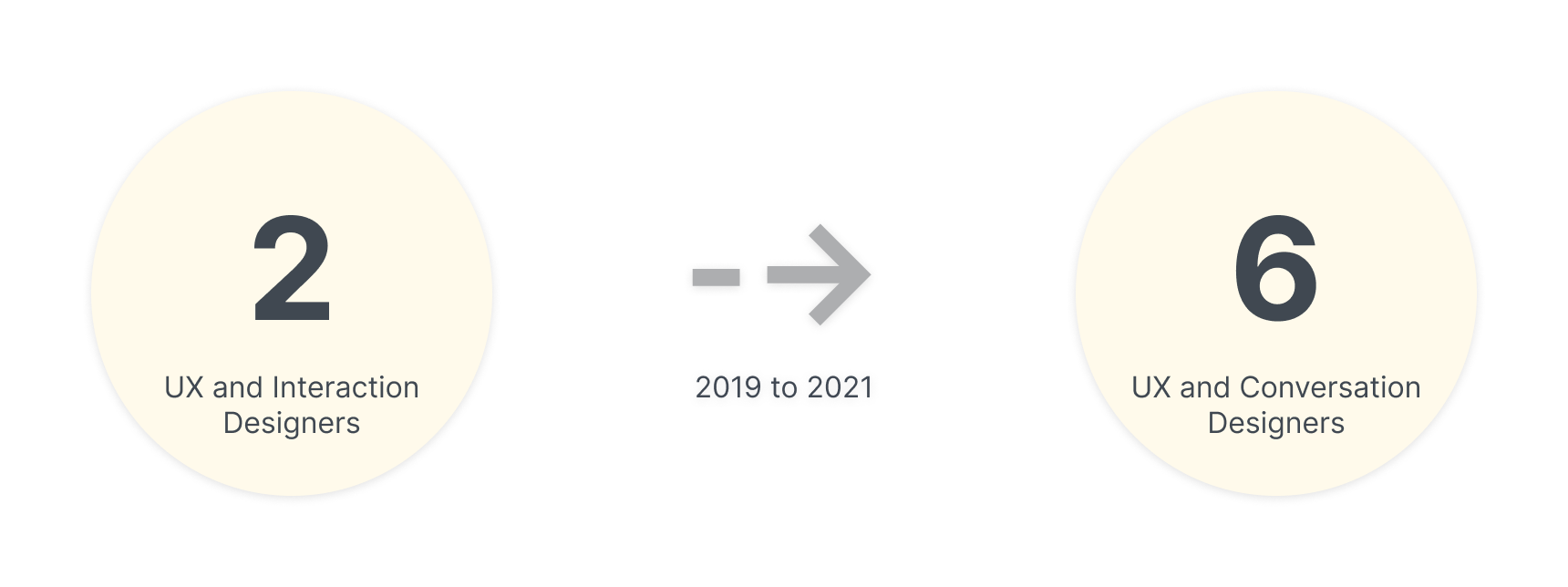
I led the team’s expansion from two to six people in six months, adding computational linguists and interaction designers, and took part in hiring and onboarding as the product’s scope kept growing.
Validating
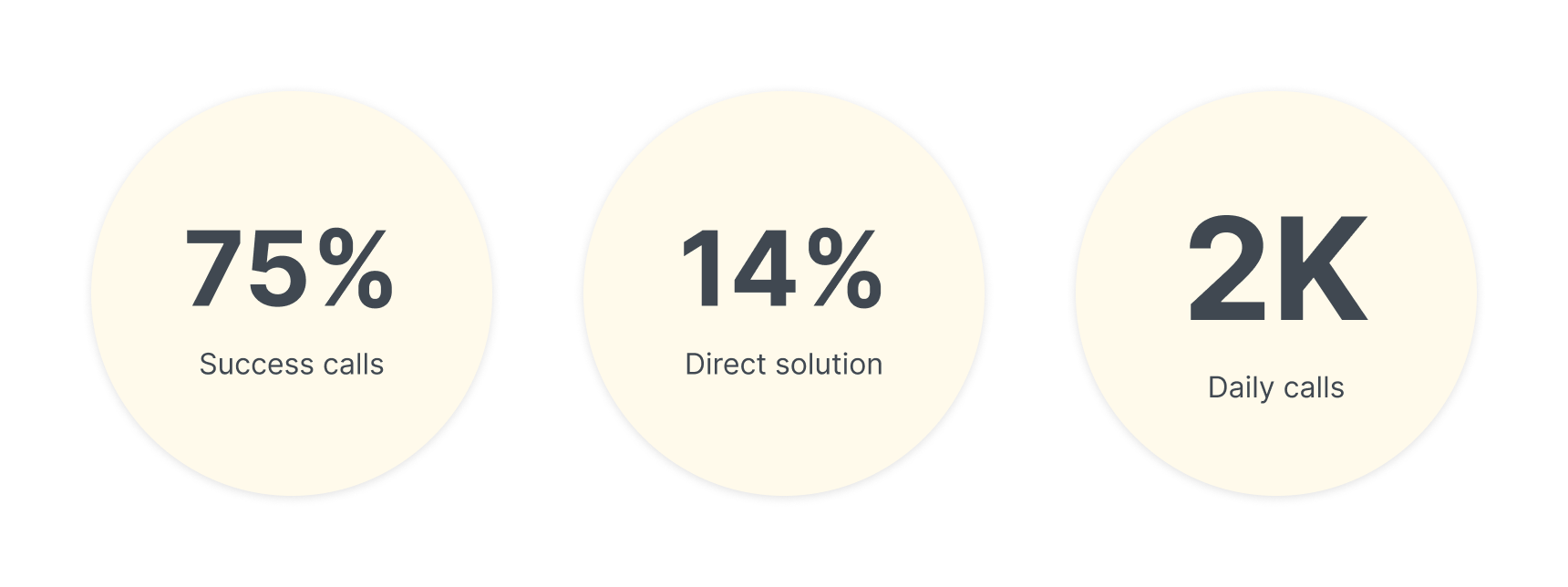
By 2021, the assistant answered 100% of incoming calls across 41 Spanish-language lines and 5 English-language lines. Within those calls:
- Behavior was correct in 75% of all handled calls.
- 14% of all handled calls were fully resolved by the assistant, with no transfer to a human agent.
- The assistant managed an average of over 2,000 calls a day.
During the pandemic, the assistant became an effective complement to the customer service team, absorbing enough use cases to help cover for the staff shortages Meliá faced through that period.
Reflection
What worked well was treating the platform limitation as the thing to fix, not the use cases. Once Dialogflow on GCP gave the team room to iterate close to real time, absorbing pandemic-driven demand became a platform question instead of a redesign-from-scratch one every time it came up. Keeping the team focused on the conversational layer, instead of splitting it across chat and voice, let that same team scale from two to six people in six months without diluting what it was getting good at.
What I would do differently is assign someone to project and onboarding documentation as soon as the team started scaling. Growing that fast in six months left new hires without a structured way to ramp up, and it cost the team some of its ability to question fast-moving decisions as critically as it should have.